
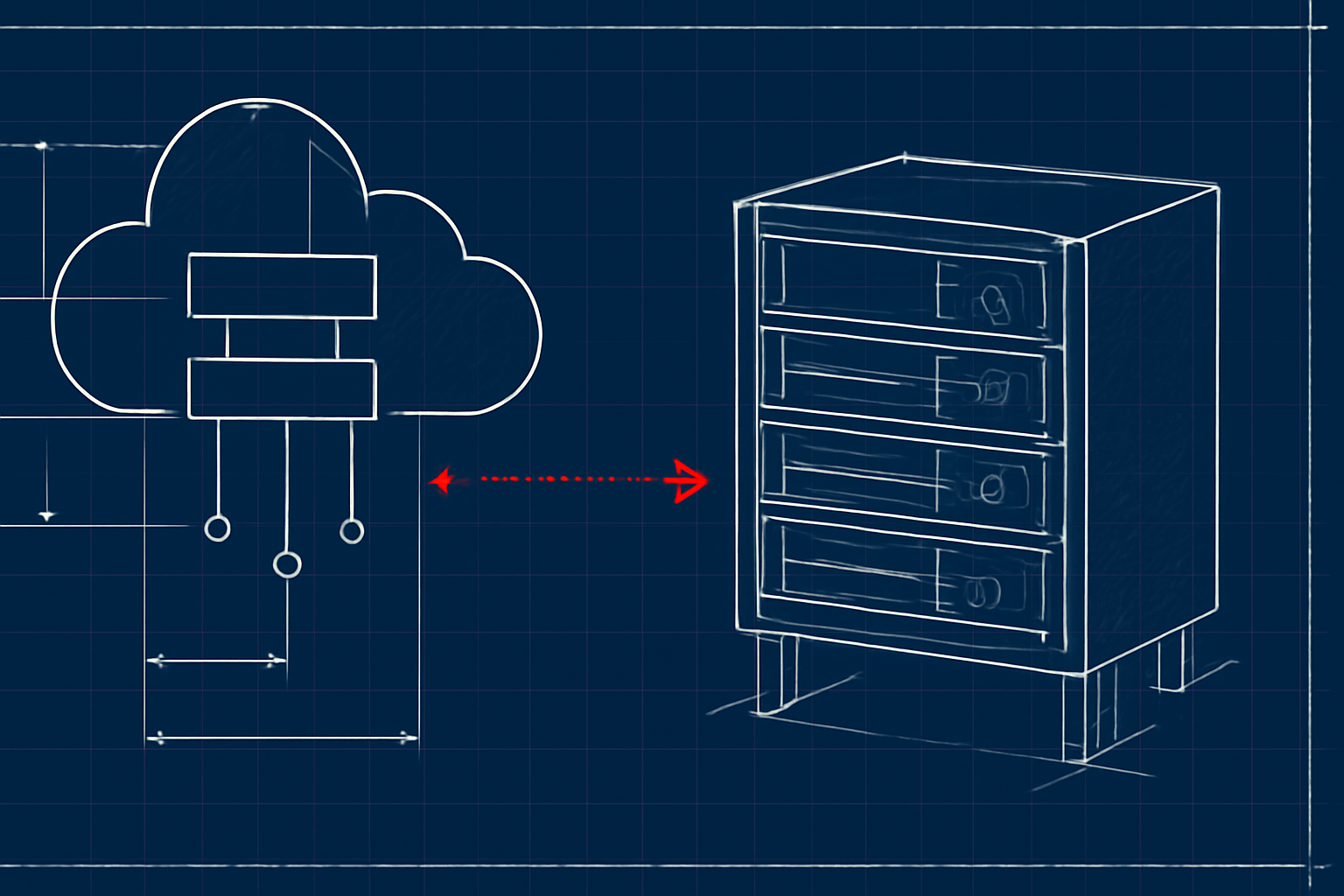
Cloud EMPI vs On-Prem MPI for Modern Healthcare Platforms
Modern healthcare platforms hit the cloud EMPI vs on-prem MPI question earlier than they expect. The first deployment is fine either way; the second customer, the first audit, and the first cost review are when the decision starts costing money or saving it. Knowing where each choice ages well and where it ages poorly makes the conversation faster.
Below is the comparison teams keep redoing in 2026. The broader picture lives in the complete guide to FHIR master patient index for modern healthcare, and deeper FHIR walkthroughs for practitioners covers related deployment patterns.
What Cloud EMPI Gets Right
The case for a cloud EMPI is concrete:
- No infrastructure to operate. The vendor handles uptime, scaling, and patching.
- Faster path to first deployment. A new platform can have a working EMPI in days.
- Built-in HIPAA posture with a BAA from most vendors.
- Predictable cost at moderate scale.
- Easier multi-region story for platforms whose customers span geographies.
For a platform in its first year, cloud EMPI is usually the cleanest answer. The team's attention is better spent on clinical workflow than on EMPI operations.
What On-Prem MPI Gets Right
On-prem earns its keep in specific cases:
- Data residency. Some customers will only allow identity data to live inside their own perimeter.
- Cost control at high volume. Beyond a certain scale, vendor billing exceeds the cost of running the MPI yourself.
- Customization depth. On-prem allows invasive customization without negotiating with a vendor.
- Vendor risk. A price change or outage at a cloud EMPI does not strand the platform if the MPI runs in-house.
- Latency control. Co-located MPI tends to outperform a remote cloud EMPI for the highest-volume lookups.
For larger platforms or those with specific regulated customers, on-prem becomes the right answer.
Where Platforms Get the Decision Wrong
A few common mistakes:
- Choosing on-prem too early. The team then spends engineering effort on MPI operations instead of product features.
- Choosing cloud EMPI without writing data residency into the customer contract. The first enterprise deal exposes the gap.
- Picking a product that only supports one deployment mode. An EMPI that runs both ways leaves the door open for the inevitable migration.
- Underestimating the operational burden of on-prem. Running an MPI is not just a deploy; it is a 24/7 commitment.
For the broader EMPI shortlist on the same comparison, the top EMPI platforms for modern health data stacks covers the platforms that support both deployment modes.
A Decision Path That Holds Up
A short framework:
- Year one: cloud EMPI almost always wins. The platform needs speed and BAA coverage, not control.
- Year two: if customer contracts include data residency clauses, plan the on-prem path. Pick an EMPI that supports both modes before the customer asks.
- Year three: if identity volume is high and steady, on-prem often saves money. If volume is bursty, stay cloud.
The platforms that age well are usually the ones that picked an EMPI flexible enough to follow customer needs rather than the founder's initial deployment preference.
A cloud EMPI vs on-prem MPI question is less about technology than about which problems the platform team wants to solve directly. Once that is clear, the deployment choice usually follows. For most modern healthcare platforms in 2026, the right answer is start cloud, write contracts that allow a move, and revisit the decision when a real customer brings it up. That sequence avoids over-engineering early and over-spending late.