
FHIR Platform Integration: 5 Design Patterns for Complex Deployments
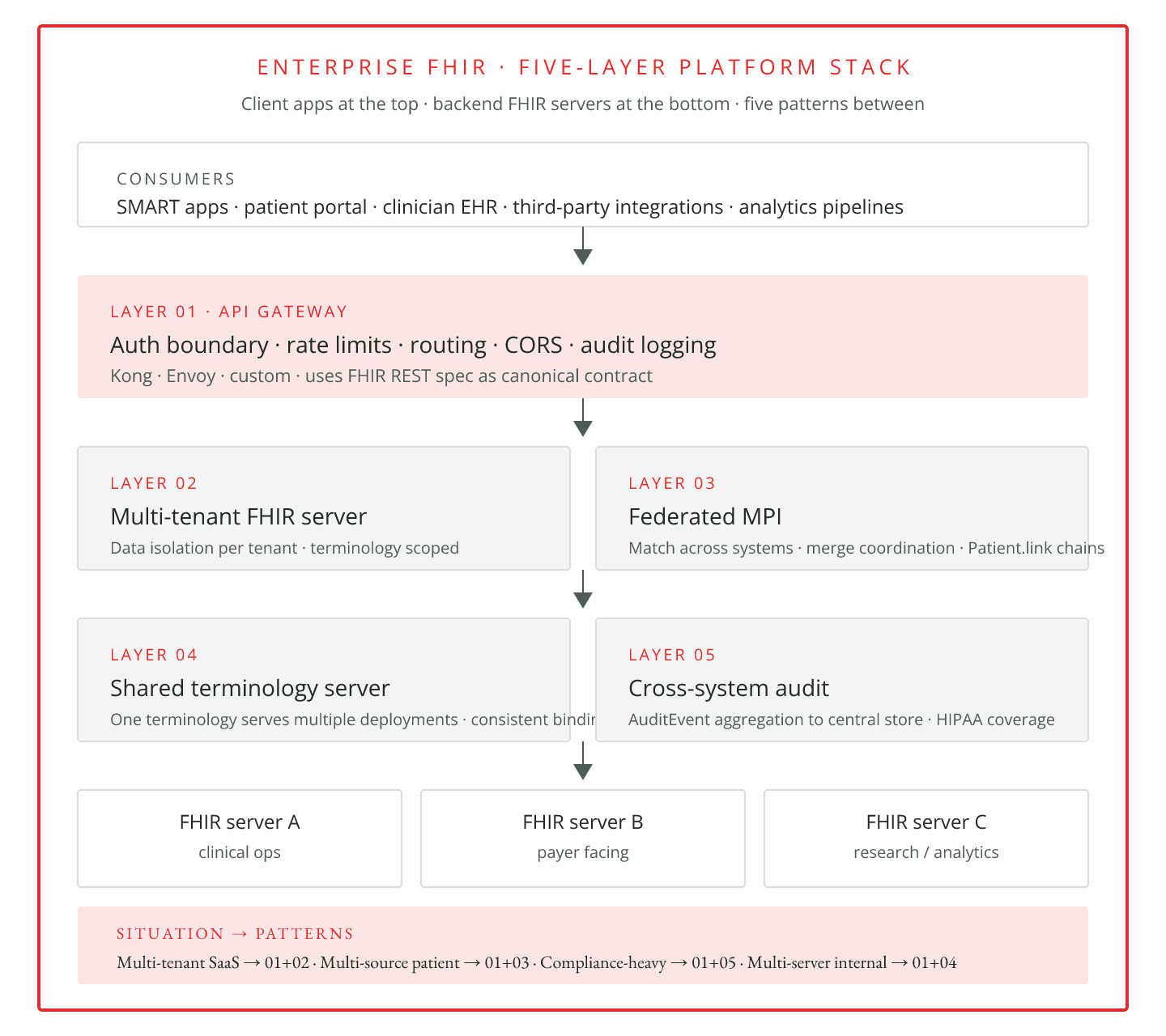
Complex FHIR platform deployments use specific integration patterns. Five that show up in enterprise settings.
Pattern 1: FHIR API gateway. Central gateway routes to backend FHIR servers, enforces auth, normalizes responses. Uses FHIR REST spec as canonical contract.
Pattern 2: Multi-tenant FHIR server. Single deployment, multiple tenants isolated by data partition. Common in health plan platforms.
Pattern 3: Federated MPI across systems. Multiple FHIR servers each with local Patient; central MPI federates identity.
Pattern 4: Shared terminology server. One terminology server serves multiple FHIR deployments. Consistent bindings.
Pattern 5: Cross-system audit aggregation. AuditEvent resources from all systems aggregated to central audit store.
When each pattern applies
| Situation | Patterns |
|---|---|
| Multiple internal FHIR servers | Gateway + shared terminology |
| Multi-tenant SaaS EHR | Multi-tenant server + gateway |
| Multi-source patient data | Federated MPI |
| Multiple auth needs | Gateway with pluggable auth |
| Compliance-heavy environment | Cross-system audit + gateway |
Gateway responsibilities
1. Auth boundary (SMART tokens, OAuth 2.0). 2. Rate limiting per token/scope. 3. Request routing to backend. 4. Response normalization. 5. CORS handling. 6. Audit logging.
Multi-tenant challenges
1. Data isolation per tenant. 2. Terminology scoping. 3. Cross-tenant leakage prevention. 4. Per-tenant billing/metering.
Federated MPI complexity
1. Match candidates across systems. 2. Merge coordination. 3. Reference resolution across systems. 4. Consistency during network partitions.
Common integration mistakes
1. Missing gateway → auth inconsistency. 2. Multi-tenant without isolation → data leaks. 3. Federated MPI without governance → duplicates. 4. Multiple terminology servers → drift. 5. Fragmented audit → HIPAA gaps.
Vendor tooling
1. API gateway: Kong, Envoy, or custom. 2. Multi-tenant: Aidbox, Medplum multi-tenant modes. 3. Federated MPI: Verato, NextGate cross-source. 4. Shared terminology: Ontoserver, Aidbox terminology. 5. Audit aggregation: custom pipelines.
FHIR platform integration for complex deployments is a design discipline. The five patterns above cover most enterprise settings.